



Description
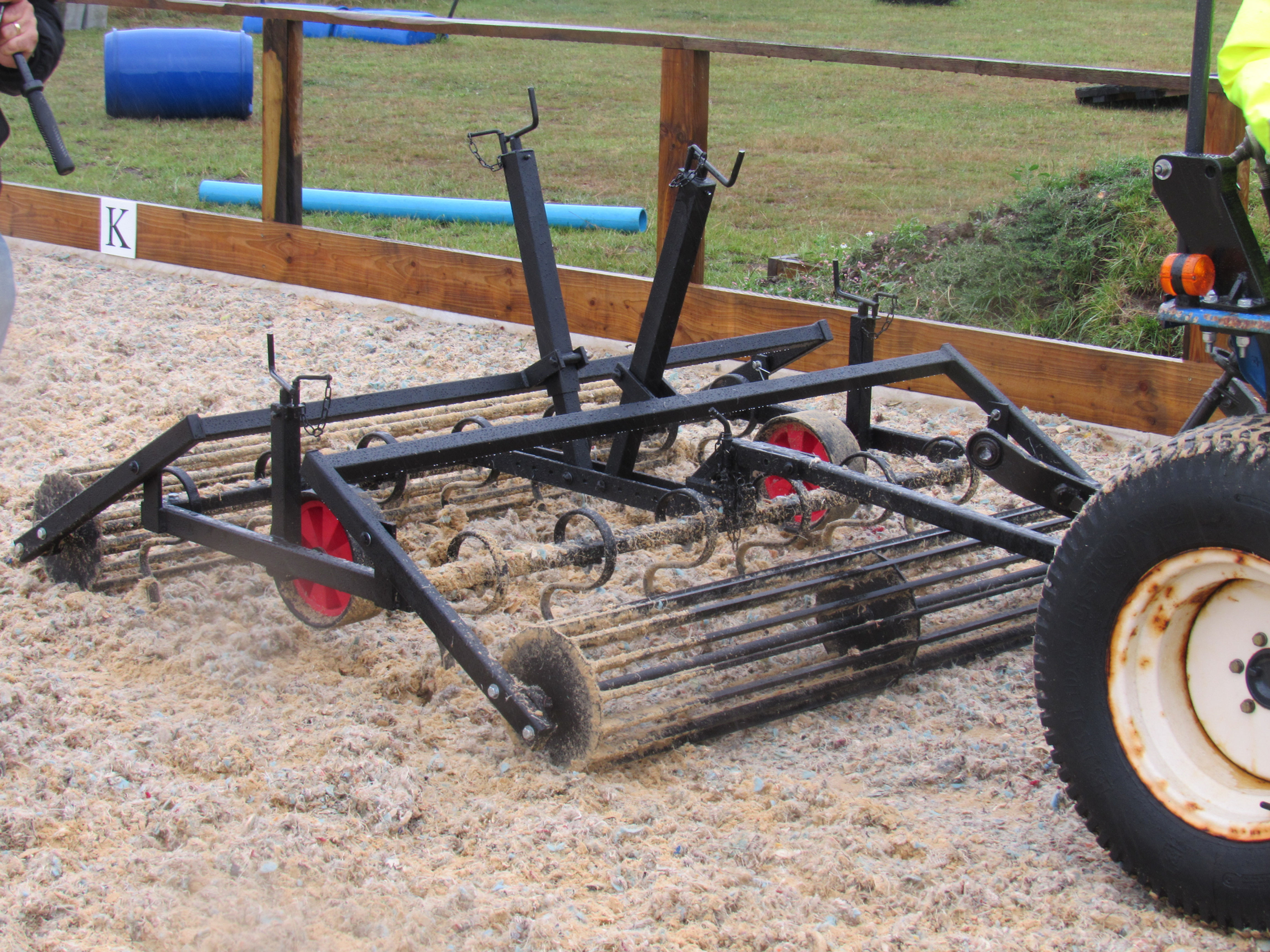
The SCH MSMGT48 Multi-Surface Manège Groomer is designed to rejuvenate and maintain menages with sand & fibre or sand & rubber surfaces, ensuring a level, safe, and ride-ready arena every time.
Key Features & Benefits:
Enhanced Riding Surfaces: Spring tines lift and loosen compacted sand while two crumb rollers redistribute material evenly, producing a consistent, safe surface for riders.
Versatile Tow-Behind Design: Equipped with a drawbar and 48" working width, it can be towed by a 4x4, ATV, or tractor, making it suitable for a variety of settings.
Effortless Transportation & Storage: Integrated wheels make moving and storing the groomer easier.
Durable & Ready to Use: Standard 50mm ball hitch allows for quick attachment, and the unit arrives fully assembled. If preferred, a clevis hitch can be selected via the Hitch Type options dropdown menu.
Optional Side Arm Edge Management: An optional removable side arm is available to collect material that accumulates along the edges of kicking boards, helping maintain a cleaner, more even arena surface. It can also be used to redistribute shingle on paths, providing added versatility beyond arena maintenance.
Customisable Options: Other working widths are available to suit your arena size and requirements.
The SCH Multi-Surface Manège Groomer is an efficient, low-maintenance solution for maintaining safe, level, and professional-quality riding surfaces. Optional accessories, including the removable Edge Management Side Arm, allow you to tailor the groomer to your specific maintenance requirements.
SCH MSMGT48 - Multi Surface Manege Groomer 48" Towed
Safety and Operating Instructions
The MSMGT is a towed multi-surface manège groomer designed to maintain both sand-and-fibre and sand-and-rubber riding surfaces. It features:
- Two crumb rollers (front with bar runners, rear with round bars)
- Two rows of spring tines (spoon‑shaped, staggered)
- Transport wheels and adjustable tow bar
⚠️ Safety Instructions
- Never leave the unit where it might be a trip hazard
- Always firmly hitch it to the towing vehicle before use
- No one should ride on the frame
- Avoid using near bystanders or sharp turns at high speed
- Never reverse with rollers or tines down
- If unsure, contact SCH helpline: 01473 328272
🚜 Transport & Setup- Fold or retract transport wheels using the wheel-handles (clockwise) until fully retracted.
- Position tow bar:
- Fixed position for transport
- “Floating” position for grooming (remove fixing pin)
🎯 Depth Adjustment & Operation- Lower both crumb rollers: front first, then rear—level the unit, aiming for ~10mm tine penetration initially.
- Adjust in increments of ~10mm until desired effect is reached.
- Max depth is 40mm to avoid damaging the surface membrane
- If any area has less than 100mm of surface depth, top it up before grooming.
Operating Procedure:
- With wheels fully retracted, in “floating” tow bar mode:
- Lower front and rear rollers as per above.
- Drive across the arena at a brisk pace, wide arcs around turns, and vary your starting point each time.
🧼 Maintenance- Wash down after use, but do not pressure‑wash bearings.
- Regularly grease screw-jacks and all moving components.
🛠️ General Tips- Use a vehicle with non-agricultural tyres to avoid digging up the surface
- Remove droppings/debris before grooming
- Groom regularly, keeping the surface slightly damp for best results
- Deep irregularities or hard-packed zones should be hand-raked first
🔒 Warranty- 12‑month manufacturer’s warranty from date of purchase (valid for defects only under correct use)
- Incorrect settings or misuse voids the warranty
✅ Quick Reference GuideTask
Action
Transport
Retract wheels, fix tow bar position
Grooming
Remove pin → floating bar → lower rollers/tines in stages
Tine Depth
≤ 40 mm, increase gradually
Driving
Brisk pace, wide turns, vary start
Aftercare
Wash down (avoid bearings), grease moving parts
🎯 Depth Adjustment & Operation
- Lower both crumb rollers: front first, then rear—level the unit, aiming for ~10 mm tine penetration initially.
- Adjust in increments of ~10 mm until the desired effect is reached.
- Maximum tine depth is 40 mm to avoid damaging the surface membrane.
- If any area has less than 100 mm of surface depth, top it up before grooming.
Important Note:
🚫 Do not use the tines in dry weather.
Doing so may over-cultivate the surface and accelerate drying, which can compromise footing quality and structure.Operating Procedure:
- With wheels fully retracted and the tow bar in “floating” mode:
- Lower front and rear rollers as above.
- Drive across the arena at a brisk pace, using wide arcs around turns. Vary your start position each time to avoid surface patterning.


